


“Money is like soap, the more you handle it, the less you will have.” - Eugene Fama, Nobel Laureate
Most investors don’t fail because markets are complex. They fail because they make a handful of repeatable, avoidable mistakes.
There’s a useful parallel in healthcare. You don’t need cutting-edge medicine to dramatically improve life expectancy. Simply avoiding the biggest risks, smoking, serious accidents, and self-harm, gets you most of the way there. The advanced treatments help on the margins as well, but avoiding the obvious mistakes does the heavy lifting.
Investing works the same way. Avoiding major pitfalls gets you the majority of the outcome. The rest, portfolio construction, manager selection, and tax optimization, is the art and science that gets the attention, but it only matters if the foundation is intact.
There are two ways to lose money:
-
Lose money fast through catastrophic mistakes
-
Lose money slow through compounding inefficiencies
We’ll walk through each, with real examples, and close with how WJ seeks to avoid these mistakes.
Lose Money Fast
Excessive Leverage
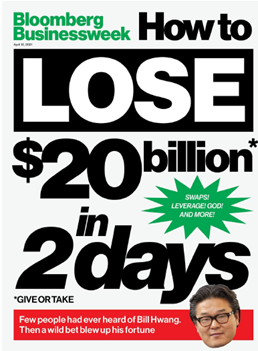
Leverage can turn mistakes into disasters. Bill Hwang made a fortunate at a legendary hedge fund and formed a family office to manage his wealth. He made a large bet on some entertainment stocks and used borrowed money and derivatives to build massive positions in them. When the market started to work against him, the banks called back their loans, which led to a collapse from roughly $20 billion to zero in days.
 Concentration
Putting all your eggs in even the most stable seeming basket can lead to disaster. Enron employees held large portions of their retirement savings in company stock, believing in the business they knew best. When Enron collapsed due to accounting fraud, they lost both their jobs and their life savings.  Speculation
Speculation is essentially gambling, but there’s a distinction. When you go to the casino, you don’t really think you’ll win, and size accordingly. There is a tendency to view speculating in stocks/crypto as “investing”, and thereby safer. For that reason, its even more dangerous. If you want to speculate, fine, but create a plan for how much to put in any single bet and know in advance how or why you’ll get out.
Chasing Hot Managers and Following “Influencers” Advice
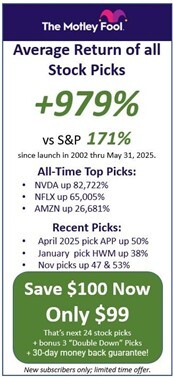
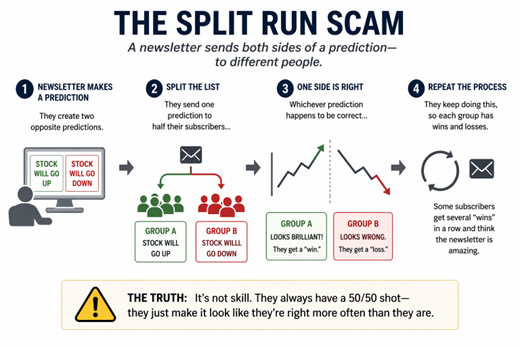
Many investors outsource mistakes. Investment newsletters are popular amongst retail investors because they exaggerate (or outright lie) about their results. Methods include cherry-picking results (ignoring losers) or using 'split-run' tactics, where they send both sides of a prediction to different consumers so they’re always right.
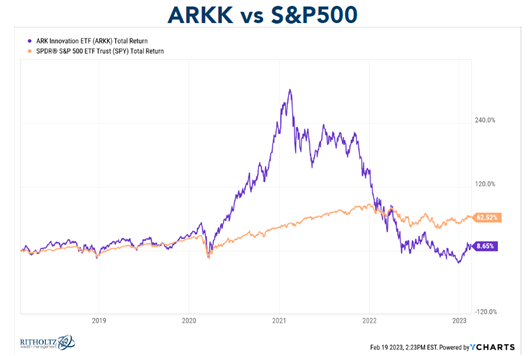
Chasing hot managers leads to similar outcomes. The ARKK ETF saw massive inflows after a 280% rise, only to fall more than 80% afterward. After the collapse, it was shown that despite maintaining positive performance overall, 98% of investors lost money because they got in at the wrong time.
 Fraud & Custody Risk
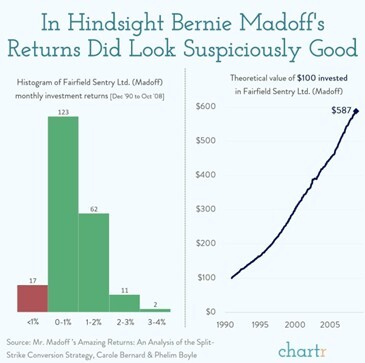
The worst-case scenario is outright fraud. Bernie Madoff maintained control of both investments and custody, eliminating oversight. Modern scams, from fake platforms to AI deepfakes, follow the same playbook: build trust, then exploit it.

|
|
Lose Money Slow
Fees & Costs
Costs compound against you. Paying 1% instead of 0.1% annually can result in hundreds of thousands of dollars lost over time. It’s one of the most predictable ways to reduce long-term returns.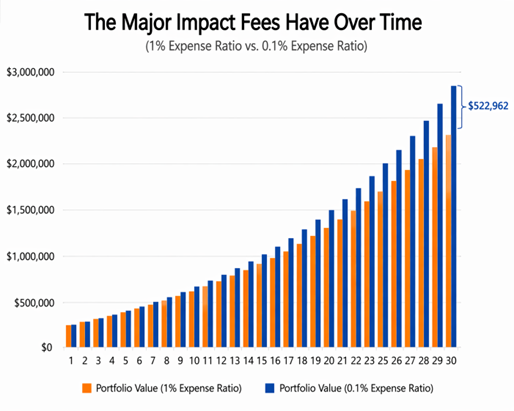 Taxes
Taxes
Taxes quietly erode returns. Interest and short-term gains can be taxed near 40%, while long-term gains are closer to 24%. You must be mindful of which types of accounts hold certain investments, a process known as “Asset Location”. In addition, there are strategic moments to buy and sell certain investments to either defer, or even eliminate, taxable gains. 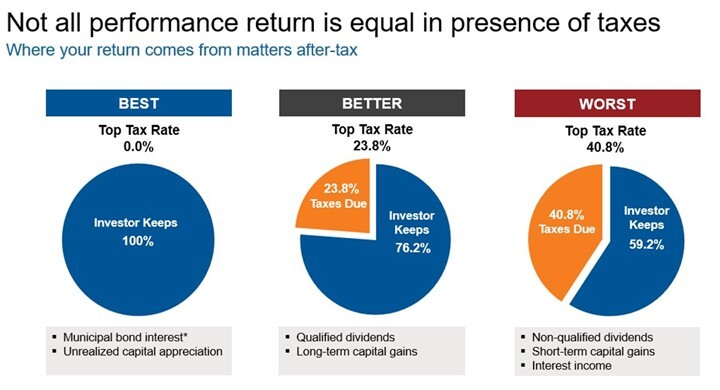 Market Timing
A single poor timing decision can cost millions. Sadly, we’ve seen this a handful of times. For example, two clients who invested $1 million in 2005, both in a 70/30 stock bond portfolio. In March 2009, one can’t take it anymore and moves down to a more conservative portfolio (40/60 stock/bond). We know in hindsight that the market recovered from there, and that decision would’ve cost the panicked client nearly $2 million today, which would’ve given them 66% more wealth.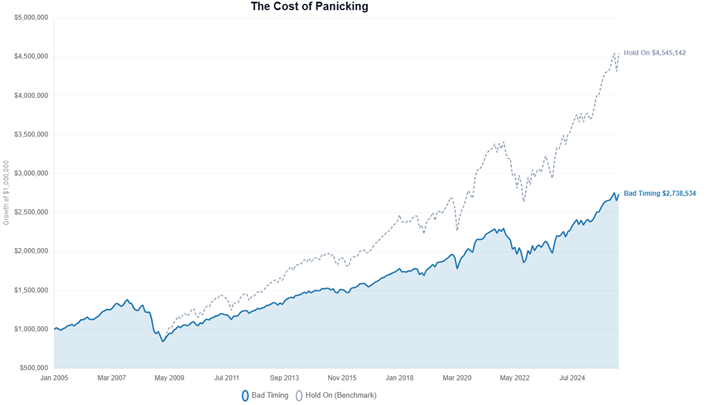 Chasing Performance
Investors are historically guilty of chasing managers after they perform well, and firing managers as soon as they struggle. The Dalbar study looks at this phenomenon and has found that investors underperform their investments by roughly 3–5% annually due simply to buying after good performance and selling after bad.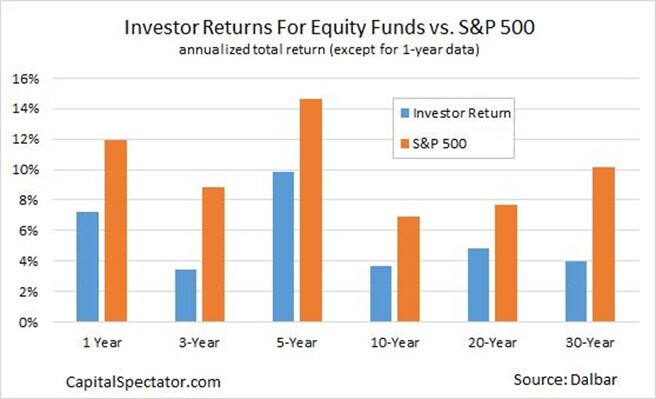 Why Investors Do This (Behavioral Biases)
These mistakes aren’t random; they’re rooted in human psychology. Overconfidence leads to concentration. FOMO (fear of missing out) drives speculation. Confirmation bias reinforces bad decisions. Many of the same instincts that help us in everyday life often work against us in financial markets.
Some of the most common behavioral biases are:
-
Overconfidence: Investors often overestimate their ability to predict outcomes, leading to concentrated bets and excessive risk.
-
FOMO: The fear of missing out drives investors into crowded trades at the worst possible time.
Confirmation Bias: Investors seek information that confirms their views, ignoring data that contradicts them.
-
Narrative Fallacy: Compelling stories often replace sound analysis, especially in trendy sectors like tech or AI.
-
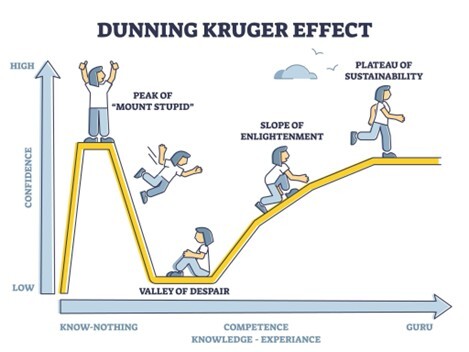
Dunning Kruger Effect: Learning a little bit about a subject gives us irrational confidence in our knowledge of that subject. It isn’t until we learn more that we experience a little humility and eventually regain that confidence.
 What WJ Does Differently
Being aware of these mistakes doesn’t make you immune, and we know that. We work on establishing a process that systematically reduces our chances of succumbing to our impulses and avoids some of the “easy” mistakes you can make by not paying attention.
-
Diversification: We spread risk across many independent risk drivers to avoid reliance on a single outcome.
-
Cost Control: We minimize fees to ensure clients keep more of what markets provide.
-
Tax Efficiency: We structure portfolios to reduce tax drag through asset location and tax-aware strategies.
-
3rd Party Custody: We don’t hold your money, Schwab does.
-
Process & Discipline: We rely on structured processes and checks and balances rather than emotion or short-term noise.
We Don’t:
-
Chase Yield over Total Return: Chasing yield can lead to overly risky investments and is tax inefficient.
-
Buy Assets with No Fundamental Value: If we can’t value it, we don’t own it.
-
Sell in Drawdowns: A sound rebalancing process means the opposite happens, where we sell what’s worked and buy what hasn’t.
To boil it down, we only focus on process and controlling what we control. Return is an output and will take care of itself so long as we remain disciplined in our approach. 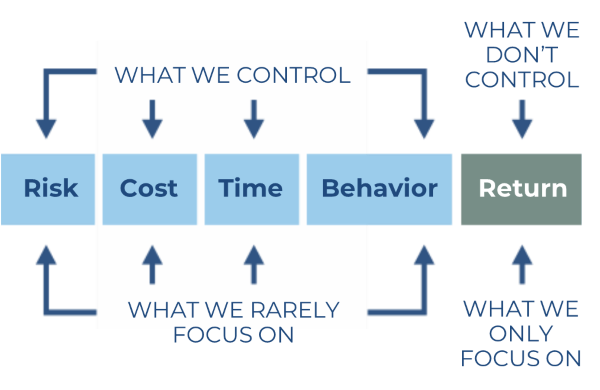 Conclusion
Successful investing isn’t about finding the next big winner; it’s about avoiding the biggest mistakes. By eliminating catastrophic risks, minimizing slow drags, and controlling behavior, investors put themselves in a position where compounding can work in their favor.
Key Takeaways
-
Avoid big, obvious mistakes first: Catastrophic losses often come from leverage, concentration, speculation, or fraud—eliminating these risks does most of the work.
-
Small inefficiencies compound over time: Fees, taxes, and poor timing quietly erode returns and can cost more than bad investments in the long run.
-
Behavior drives outcomes: Biases like overconfidence, FOMO, and performance chasing consistently lead investors to buy high and sell low.
-
Process beats prediction: Diversification, cost control, tax efficiency, and disciplined rebalancing matter far more than trying to pick winners.
PAST PERFORMANCE IS NOT A GUARANTEE OF CURRENT OR FUTURE RESULTS. Examples of historical information included in this presentation do not, nor are they intended to, constitute a promise of similar future results. Specific client portfolio allocations, risks and returns can and may deviate from these examples depending on accounts and types of investments available through each account. Future market views by WJ Interests, LLC may vary significantly from the historical examples presented herein and no one receiving this summary should assume that WJ Interests, LLC will be able to replicate successful views in the future.