
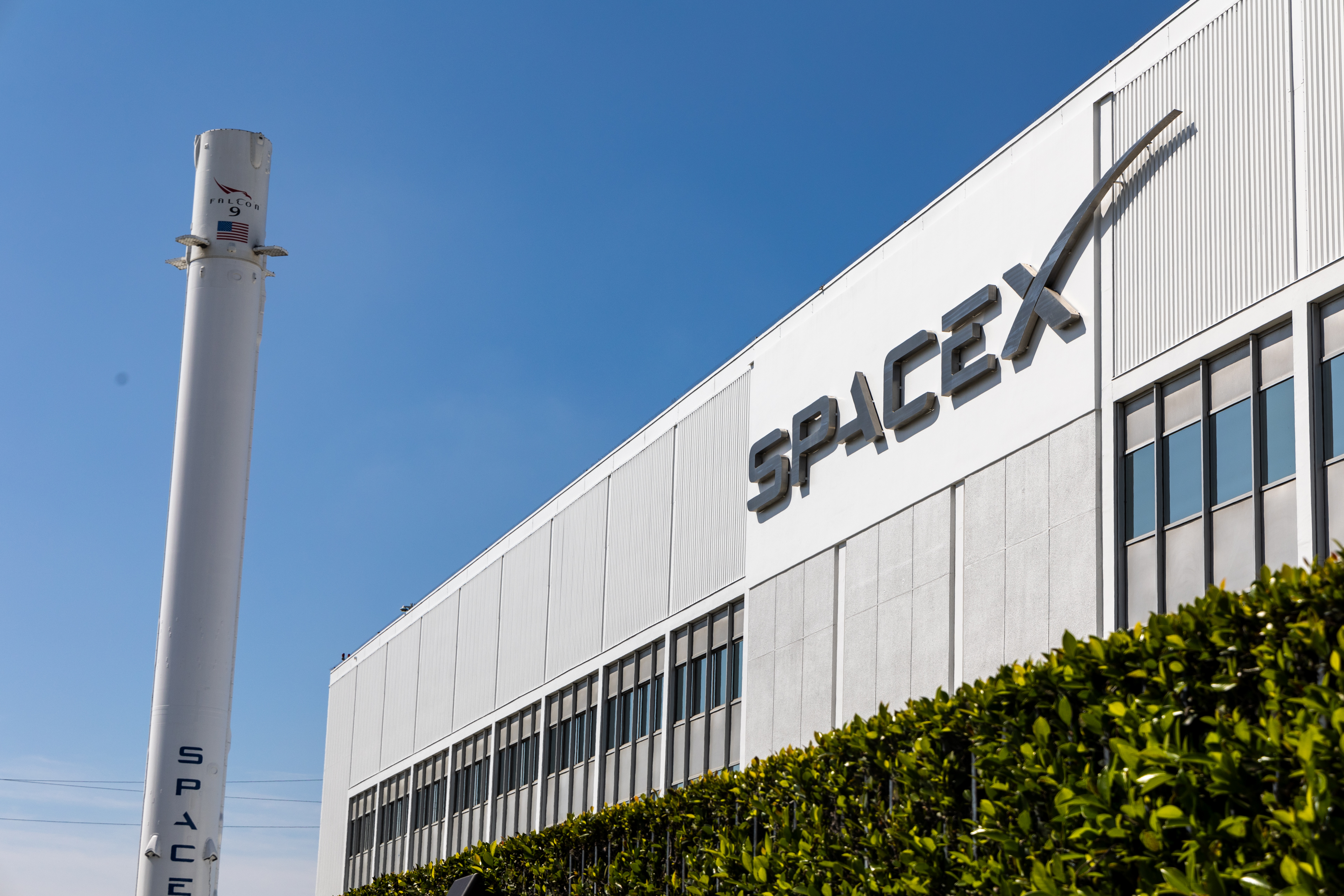

SpaceX is one of the most talked-about IPOs in market history. The company is targeting a roughly $1.75 trillion valuation, a $135 share price, and an offering size near $75 billion, which would make it the largest IPO ever. Trading is expected to begin on Nasdaq under the ticker SPCX. We’ve had several clients reach out to us about the highly anticipated SpaceX IPO and would like to provide some information about it.
An IPO, or initial public offering, is the first time a private company sells shares to public investors. In SpaceX’s case, investors are not just buying a rocket company. They are buying a combination of launch services, satellite internet, government and defense contracts, and a very ambitious AI infrastructure story.
What SpaceX Does
SpaceX started as a launch company. It designs, manufactures, and launches rockets and spacecrafts. Its Falcon rockets helped make reusable launch a commercial reality, and its Starship program is intended to reduce the cost of sending large payloads into orbit.
The company’s most important financial engine today is Starlink, its low-earth-orbit satellite internet business. Starlink is the piece of SpaceX that looks most like a scaled operating business rather than a science project. In 2025, SpaceX’s Connectivity segment, primarily Starlink, generated $11.4 billion of revenue, $4.4 billion of operating income, and $7.2 billion of segment Adjusted EBITDA.
That is the core of the bull case: SpaceX has built a real business with global reach, strategic importance, and a network that may be difficult for competitors to replicate. Supporters believe Starlink could become a global communications utility, Starship could unlock entirely new launch economics, and the company’s newer AI ambitions could create another large growth market if orbital computing becomes commercially viable. Reuters reported that SpaceX executives have been pitching space-based AI compute demonstrations as soon as late 2027.
The Valuation
The financials are impressive, but the valuation is demanding.
In 2025, SpaceX generated $18.7 billion of revenue, reported a $2.6 billion operating loss, and produced $6.6 billion of Adjusted EBITDA.
At the proposed $1.75 trillion valuation, SpaceX would trade at roughly 94 times 2025 revenue and 266 times 2025 Adjusted EBITDA. There is no meaningful P/E ratio because the company is not profitable.
To put the valuation in perspective, a $1.75 trillion price tag would allow an investor to buy all of Exxon Mobil and all of Walmart, with roughly $160 billion still left over. Those two companies generated roughly $51 billion of profit in their latest completed fiscal years. SpaceX reported a loss.
That is not a normal valuation. It is a valuation that assumes SpaceX wins across multiple massive markets at once: satellite broadband, commercial launch, government and defense work, AI infrastructure, and possibly orbital computing.
How Retail Investors May Get Access
Retail access is one of the more unusual parts of this IPO. Most large IPOs are dominated by institutions, but SpaceX has reportedly reserved as much as 30% of the offering for retail investors. Fidelity says this larger retail allocation is why it is allowing customers with as little as $2,000 in a retail brokerage account to request shares.
But requesting shares is not the same as receiving shares. Allocation depends on demand, and investors may receive the full amount requested, a partial allocation, or nothing at all. Fidelity says it may use a lottery if demand exceeds supply.
The other important point is selling restrictions. Retail investors generally are not legally locked up the way insiders often are. If you receive IPO shares through a custodian, you can usually sell them once the stock is trading. The catch is that brokers often have “flipping” policies. Fidelity says selling within the first 15 calendar days may restrict future IPO access. Robinhood and SoFi generally treat sales within 30 days as flipping and may limit future IPO participation.
In plain English: you may be able to sell, but your broker may punish you by limiting access to future IPOs.
The Index Inclusion Drama
One of the stranger parts of this IPO has nothing to do with rockets. It has to do with index funds.
Some index providers appear to be speedrunning access to mega-IPOs. Nasdaq updated its Nasdaq-100 methodology to allow certain large newly listed companies into the index faster. FTSE Russell also introduced fast-entry enhancements for large IPOs in Russell U.S. indexes, including a path for eligible IPOs to be added after the fifth trading day. MSCI has also confirmed it will apply its existing early-inclusion rules for large IPOs, which could create passive demand if SpaceX qualifies.
S&P is taking a different approach. S&P Dow Jones Indices is not fast-tracking SpaceX into the S&P 500. It sticks with its normal rules around profitability, seasoning, and investable float. Since SpaceX is newly public, has limited freely traded shares, and is not GAAP profitable, it is not expected to enter the S&P 500 immediately.
That has created real debate. The fast-entry argument is that benchmarks should reflect the modern market, where companies can come public already worth hundreds of billions or even trillions of dollars. The pushback is that fast inclusion can turn passive investors into forced buyers before the stock has had time for normal price discovery.
What's the Downside?
The downside is valuation, profitability, execution risk, and governance.
SpaceX is a remarkable company, but it is not a cheap stock at the proposed price. Starlink is profitable, but the consolidated company is still posting operating losses. The AI segment is especially capital intensive, with large losses and heavy investment needs. The valuation asks investors to pay today for years of successful execution across several difficult markets.
There is also real execution risk. Starship is central to the long-term story because it underpins lower launch costs and potential orbital computing economics, but Reuters notes that Starship remains behind Elon Musk’s original timelines and still needs to demonstrate rapid reusability at scale.
Governance is another concern. Reuters has noted that SpaceX’s structure is designed to give Elon Musk complete control with no investor guardrails. For some investors, that is a feature. For others, it means public shareholders may have limited influence over major decisions.
Why This IPO Environment is Unique
SpaceX is not coming public in a vacuum. It is part of a much larger capital cycle around AI.
Reuters has reported that OpenAI and Anthropic have both confidentially filed for U.S. IPOs. At the same time, large public companies are raising enormous amounts of capital to fund AI infrastructure. Google increased its planned equity offering to $84.75 billion to fund AI ambitions, while Amazon secured a $17.5 billion loan facility amid an AI-driven capital spending ramp.
That makes this environment unusual. Public investors are being asked to fund both sides of the AI buildout. They are getting new direct exposure through IPOs like SpaceX, OpenAI, and Anthropic, while also funding the existing tech giants as they raise capital for data centers, chips, power, and compute capacity.
That does not mean the AI theme is wrong. It does mean a lot of capital is chasing the same broad opportunity at the same time.
Our Take
SpaceX is an extraordinary company. That does not make it a great investment at any price.
We do not invest on hype. At the proposed valuation, SpaceX looks wildly expensive by conventional measures. Roughly 94 times revenue and 266 times Adjusted EBITDA is not a margin-of-safety valuation, especially for a company that is still unprofitable on a GAAP basis.
We also do not feel the need to rush into more AI exposure. Most diversified portfolios already own meaningful AI exposure through public-market leaders, including semiconductor companies, cloud providers, software platforms, and broad market index funds. Adding SpaceX at the IPO may increase concentration in the same theme at a very high entry point.
Our view is simple: we will likely have access to SpaceX over time through normal channels, including funds, ETFs, active managers, and potentially other vehicles where appropriate. We do not think clients need to reach for special access or chase the opening trade to participate in the long-term story.
At this valuation, SpaceX is more of a trade than a core holding. For investors who want to speculate, sizing is everything. Keep it small, understand the volatility, know your custodian’s selling rules, and be honest about what you are buying: a great company at a very demanding price.
Key Takeaways
-
SpaceX is launching the largest IPO in history.
-
Starlink is driving the company’s growth and profitability.
-
The valuation is exceptionally high and assumes significant future success.
-
Retail investors may have rare IPO access, but demand will be intense.
-
Strong company, demanding price, investors should proceed carefully.
Disclosure: This article is for educational purposes only and is not a recommendation to buy, sell, or hold SpaceX or any other security. IPO terms, allocations, index treatment, and trading dates may change.
PAST PERFORMANCE IS NOT A GUARANTEE OF CURRENT OR FUTURE RESULTS. Examples of historical information included in this presentation do not, nor are they intended to, constitute a promise of similar future results. Specific client portfolio allocations, risks and returns can and may deviate from these examples depending on accounts and types of investments available through each account. Future market views by WJ Interests, LLC may vary significantly from the historical examples presented herein and no one receiving this summary should assume that WJ Interests, LLC will be able to replicate successful views in the future.